Luna.

THE LUNA GUIDE · ES / EN

Pregnancy, postpartum and child development

Information for families on physical and emotional health, care and the early years.

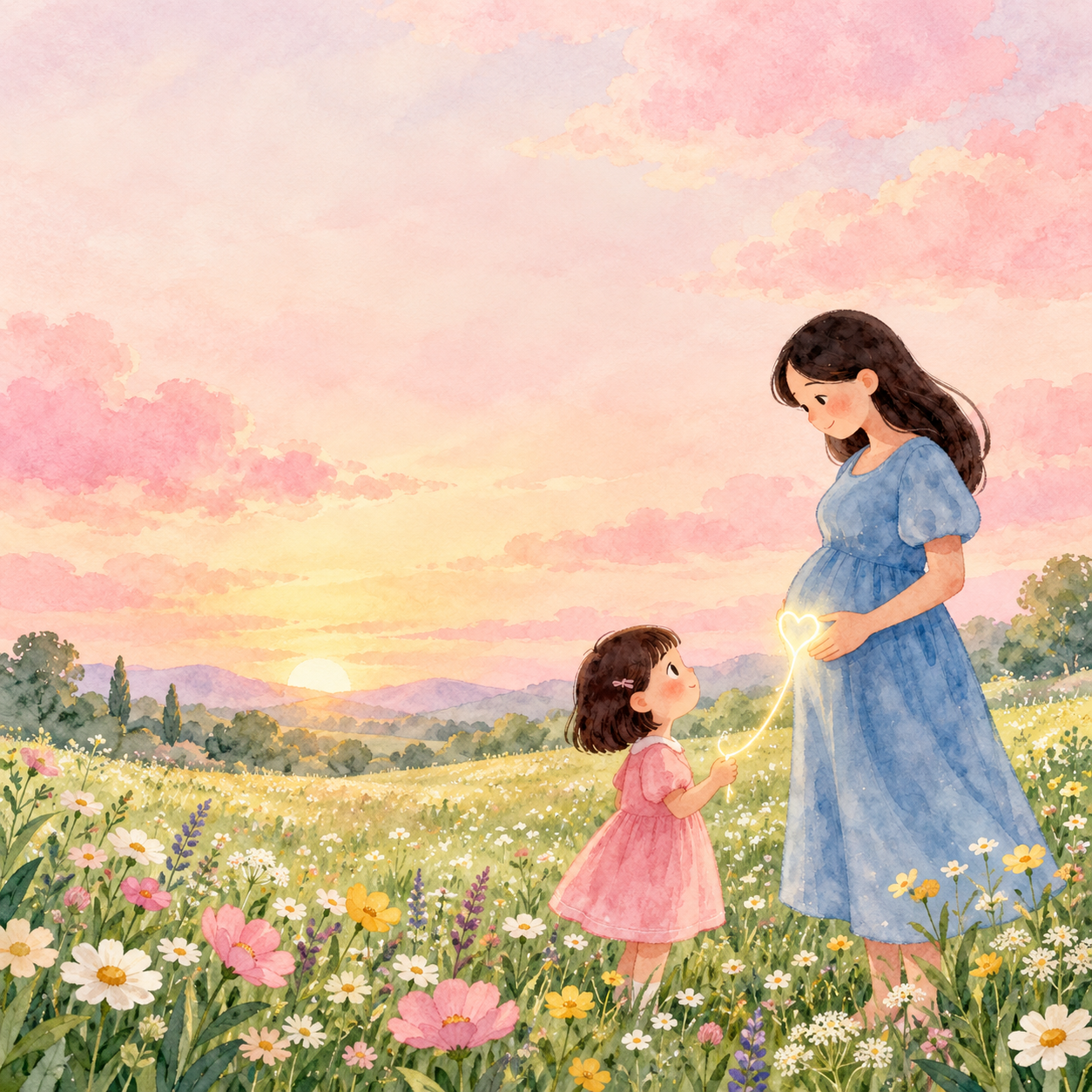
An illustration from Luna: shared care

01 · STAGES

Topics by stage

01

Before pregnancy

Preparing includes caring for yourself.

Read a little more

A pre-pregnancy appointment is a chance to discuss health, medicines, vaccinations, habits and support. Ask about folic acid before pregnancy and during the first 12 weeks: some people need a different dose. Ask for help with smoking or alcohol if needed. Do not stop prescribed medicines on your own.

02

Mental health during pregnancy

You do not need to feel happy all the time to care well.

Read a little more

Persistent sadness, loss of interest or intense anxiety deserve support. Speak with your midwife, doctor or mental health professional. Emotional difficulties do not make you a bad parent. Partners can need support too. Treatment and help are available.

03

Nutrition during pregnancy

Caring for yourself does not require a perfect diet.

Read a little more

A varied diet helps meet your needs during pregnancy. Include fruit and vegetables, fibre-rich foods and protein sources. Wash fresh produce carefully and check pregnancy food safety advice. If nausea, dietary restrictions, financial difficulties or eating concerns affect you, ask for support that suits your needs.

04

Physical activity during pregnancy

Activity should fit your pregnancy and your health.

Read a little more

Staying active can support wellbeing. If you were not exercising before, start gradually and ask what is appropriate for you. This is not about exhaustion or reaching a target. If you have complications or questions, follow advice from your maternity team.

05

Preparing for birth

Your preferences matter, and so does being able to ask questions.

Read a little more

A birth plan records preferences about support, pain relief, movement and first care. Discuss it with your midwife and ask what your maternity service offers. Plans may change with circumstances: being involved in decisions remains part of care. Needing an intervention does not make your birth a failure.

06

Postpartum care

After birth, care, time and companionship matter.

Read a little more

Check-ups and support should address both the mother’s and baby’s needs and context. Bring questions about recovery, pain, feeding, rest and wellbeing to your appointments. Sharing tasks and asking for practical help can make daily life easier. You do not have to manage everything alone.

07

Recovery and pelvic health

Your recovery deserves attention in its own right.

Read a little more

Your body changes after pregnancy and birth. Discuss persistent pain, leaking urine or a feeling of heaviness with your care team. Ask for guidance on pelvic health and returning to activity, tailored to your situation. Recovery does not need to become a race to regain a previous appearance.

08

Safer sleep for babies

On their back, on a firm surface, with a clear sleep space.

Read a little more

Place your baby on their back for every sleep, including naps, on a firm, flat, level surface with a fitted sheet and no pillows, toys or loose bedding. For the first six months, share a room, with your baby in their own sleep space separate from your bed.

09

Child development

Milestones guide you; they are not an exam.

Read a little more

Notice how your child plays, learns, speaks, acts and moves. If they lose skills, miss a milestone or you are concerned, speak with their healthcare professional without waiting. CDC checklists cover ages up to 5 years and do not replace individual assessment. Comparing children does not explain their needs.

10

Feeding your baby

Noticing your baby’s cues helps you respond during feeds.

Read a little more

Responsive feeding follows hunger and fullness cues. When bottle feeding, respect pauses and do not force your baby to finish. Ask for help with feeding difficulties or questions about preparing and offering milk safely. Feeding decisions need information and support, not judgement.

11

Play and learning at ages 1–6

Everyday life offers opportunities to learn.

Read a little more

A Luna activity idea: share a story, describe what you are doing or invent a turn-taking game adapted to your child’s interests and abilities. Let them lead and respond; there is no task to complete. At ages 5–6, draw how you imagine school and talk about questions. This is not a developmental test.

12

Family support and shared care

A support network grows through practical acts.

Read a little more

A Luna activity idea: choose three forms of help for this week, such as preparing food, attending an appointment together or making time to rest. Agree who can do each task and when. Include partners, relatives, friends and trusted people. Asking for help does not take away independence.

13

Pregnancy loss and grief

There is room for grief here too.

Read a little more

Pregnancy loss can have physical and emotional effects, and partners may need support too. Ask your care team about counselling and bereavement support. You do not have to feel or express the same things as someone else. Seek medical care for physical symptoms or concerns about your safety.

02 · ATTENTION AND WELLBEING

Mindfulness and Mindfetalness

Mindfulness and Mindfetalness are different. Explore their purpose and limits.

Mindfulness: attention to the present

This means noticing sensations, sounds and thoughts without trying to empty your mind. It may help some people with stress, anxiety or low mood; it does not suit everyone. If it increases distress, stop and seek guidance. A short exercise is not equivalent to therapy.

An optional pause

If you wish, notice your feet resting and a sound around you. Breathe at your own pace, without forcing or holding your breath. You can keep your eyes open and stop whenever you wish. There is no perfect way to do it.

Mindfetalness: noticing movements

A method by Ingela Rådestad and her team for paying attention to a baby’s movement pattern. The original resource suggests starting around week 28. It is not a diagnostic test or a guarantee of wellbeing. Explore the official explanation and discuss it with your midwife.

01Get to know02Notice03Seek care for changes
Explore the original method in English

Ingela Rådestad · Mindfetalness
External resource from its creators. This link does not imply collaboration or endorsement of this guide.

03 · VIDEO AND LEARNING

Videos on child development

UNICEF videos with links to the original resources. Subtitle controls depend on the provider; each video has an English summary. Videos load only when you choose.

Play and your baby’s brain

Responding to a baby’s signals and sharing play creates opportunities for interaction. Jack Shonkoff explains for UNICEF.

Read the original resource · UNICEF

04 · RESEARCH

Studies and reviews

What was studied, what was found and what we cannot conclude. This selection was editorially checked on 20 October 2026.

Cluster-randomised trial · BJOG

Mindfetalness: a trial of 39,865 pregnant women

Akselsson and colleagues (2020) compared groups of clinics in Stockholm. The primary outcome, low five-minute Apgar scores, was not reduced. Some secondary outcomes differed. This trial does not justify presenting the method as a guarantee of wellbeing or proven stillbirth prevention.

Read the study

Pilot trial · Journal of Consulting and Clinical Psychology

Mindfulness: specific programmes and contexts

The pilot study by Dimidjian and colleagues (2016) examined mindfulness-based cognitive therapy during pregnancy and postpartum. A structured therapeutic programme is not equivalent to the brief exercise on this website. Its population and context limit generalisation to all families.

Read the study

Full text in Spanish

Relaxation during labour

Review of 11 publications (6 reviews and 5 trials), searched through February 2021. Some techniques may help with pain, but evidence is limited and of low or moderate quality. These are not 11 independent trials; the review does not replace pain-relief options agreed with your care team.

Vivancos-Marín N, Cánovas-Ambit G, Sánchez-García JC, López-Requena A, García-Vidal JA (2024). Técnicas complementarias de relajación y analgesia no farmacológicas durante el parto: revisión sistemática. Enfermería Global, 23(73).

Read in Spanish

DOI: 10.6018/eglobal.555891

Full text in Spanish

Relaxation during pregnancy

Study of 46 pregnant women in Portugal with intervention and control groups. It assessed progressive relaxation and visualisation, reporting favourable emotional and physiological measures. Its small sample and age limit conclusions. It does not test Mindfetalness or establish universal benefits for babies.

Nereu Bjorn MB, Neves de Jesus S, Casado Morales MI (2013). Estrategias de relajación durante el período de gestación. Beneficios para la salud. Clínica y Salud, 24(2).

Read in Spanish

DOI: 10.5093/cl2013a9

The Luna story

Content reviewed on 20 October 2026. References appear alongside each topic.

Luna and the Invisible Thread cover

Luna y el hilo invisible

Bilingual digital edition · ISBN 978-84-09-93347-1

Read the bilingual story

DOI: 10.5281/zenodo.23212891